- Northern Arizona University researchers found evidence that water may travel rapidly through underground rock fractures.
- An experimental dye produced faint signals at a Flagstaff municipal well in less than two weeks.
- Groundwater in the study area lies more than 1,000 feet below the surface.
- The findings could help communities identify locations for groundwater recharge projects.
- Additional testing is needed to evaluate water quality, travel times, and recharge effectiveness.
Thursday, November 26, 2025 — How long does it take rainwater or melting snow to reach an aquifer more than 1,000 feet underground? In parts of northern Arizona, the journey may be considerably shorter than previously thought.
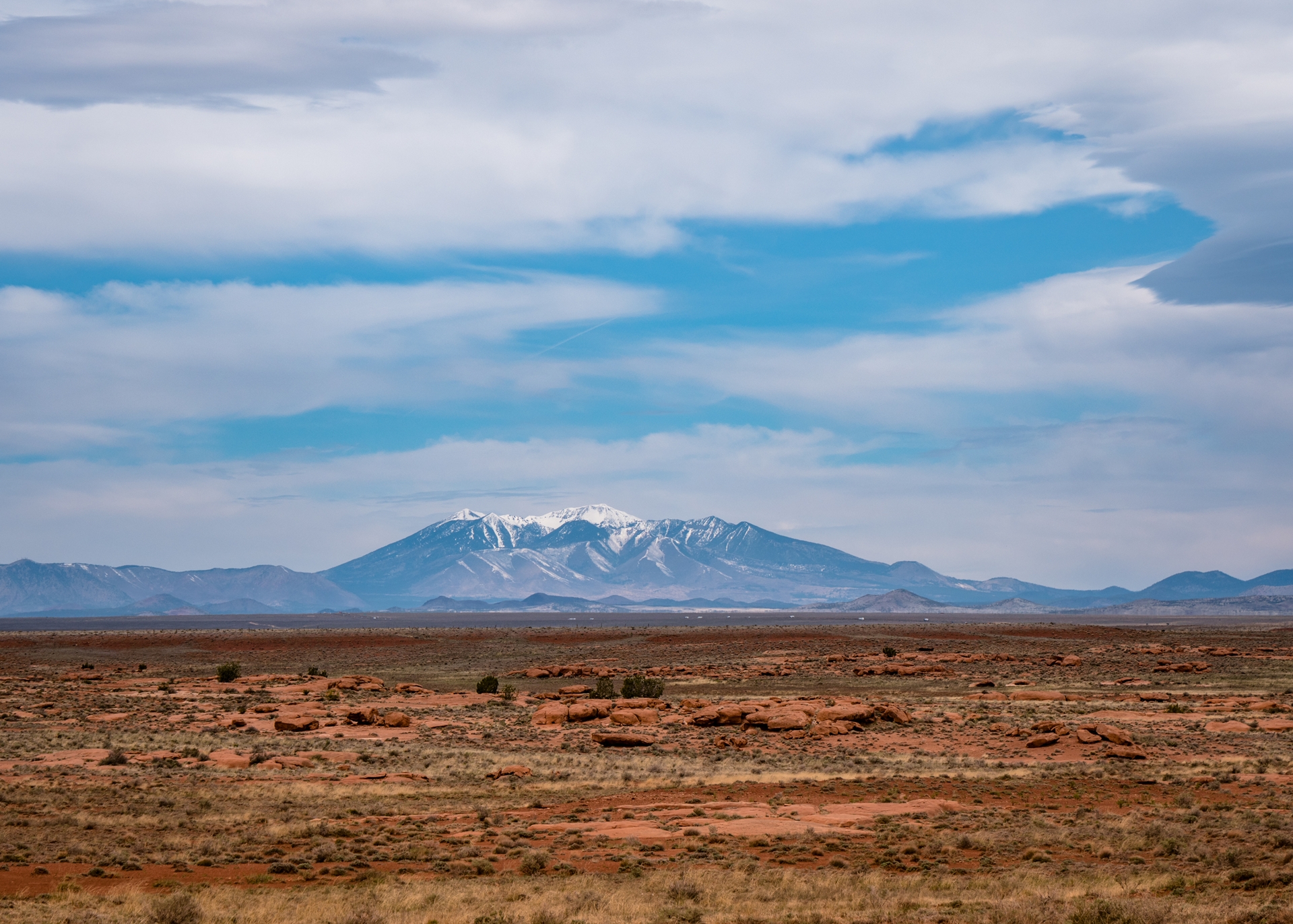
A preliminary study by Northern Arizona University researchers, conducted in partnership with the City of Flagstaff, suggests that natural cracks and fractures in underground rock may provide relatively fast pathways for water to reach the Coconino aquifer.
The findings, published November 9, 2026, in the scientific journal Groundwater, could have implications for communities looking for ways to replenish underground water supplies.
The Coconino aquifer, commonly called the C-aquifer, extends beneath more than 27,000 square miles of northeastern Arizona, northwestern New Mexico and southeastern Utah. Flagstaff relies on groundwater for approximately 50% to 80% of its annual municipal water supply.
Following Water Beneath Flagstaff.
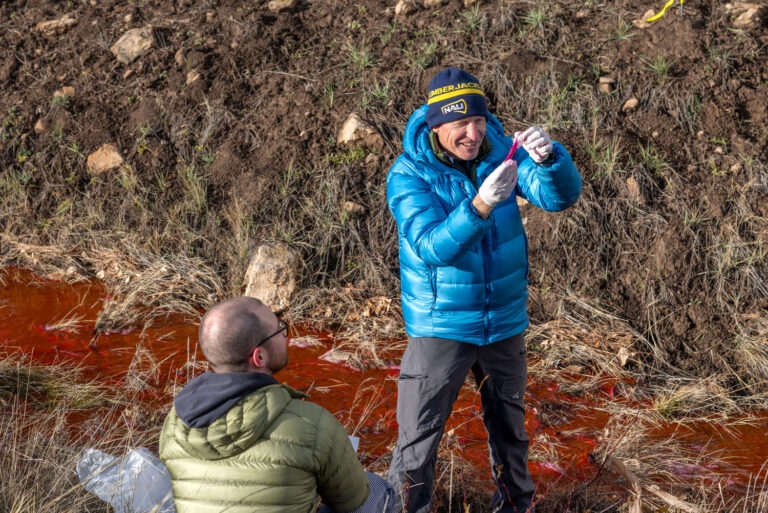
On December 3, 2025, researchers began releasing reclaimed water containing a fluorescent dye into a normally dry wash in central Flagstaff.
The experiment was conducted by Caelum Mroczek, Cecily Combs and Abraham Springer of Northern Arizona University.
Over 48 hours, approximately 720,000 gallons of reclaimed water flowed into the wash at a rate of 250 gallons per minute. The water traveled only about 950 feet along the surface before disappearing into the ground.
Researchers monitored three groundwater locations for signs of the dye.
Between December 14 and 16, two independent monitoring methods recorded faint fluorescent signals consistent with the dye at a municipal production well approximately 1.7 miles northeast of the release site.
The signals suggested that water may have traveled through more than 1,000 feet of underground rock and then moved horizontally toward the well in just 11 to 13 days.
Based on the straight-line distance, researchers estimated an apparent travel rate of approximately 650 to 800 feet per day.
No similar signals were recorded at the other two monitoring locations.
 news
Nature’s Underground Plumbing.
Beneath Flagstaff lies a series of rock formations containing limestone, sandstone, and other sedimentary materials.
Some of the limestone contains natural cracks, faults, and openings enlarged over time as water dissolves the rock. Geologists refer to landscapes containing these features as karst terrain.
Instead of slowly seeping through tiny spaces between rock particles, water can sometimes move more rapidly through interconnected fractures.
Researchers believe that such a network of fractures helped water travel from the Flagstaff wash toward the municipal well.
The study also noted that continuous pumping at the municipal well may have influenced the direction and speed of underground water movement.
What This Could Mean for Groundwater Recharge.
Managed aquifer recharge is a state-regulated process that involves placing water into the ground to replenish underground water supplies. Potential sources include reclaimed water and stormwater.
Areas where groundwater lies hundreds or thousands of feet underground have historically been considered challenging locations for recharge projects.
The Flagstaff experiment suggests that depth alone may not rule out such projects where favorable geological conditions exist.
The researchers identified several potential opportunities for combining groundwater recharge with other community projects, including:
-
Urban stormwater management.
-
Post-wildfire flood control.
-
Forest thinning and wildfire risk reduction.
-
Habitat restoration.
-
Water quality improvement projects.
Similar dye-tracing experiments could help communities determine whether proposed recharge locations are connected to the aquifers they hope to replenish before investing in more extensive infrastructure.
Faster Recharge Also Raises Water Quality Questions.
Although rapid underground water movement could benefit groundwater recharge projects, it also presents challenges.
As water moves through soil and rock, natural physical, chemical and biological processes can help reduce certain contaminants.
When water travels quickly through underground fractures, however, there may be less time for those processes to occur.
The researchers noted that potential recharge projects would require careful evaluation of water quality, particularly when the source water may contain pathogens, nutrients or organic contaminants.
The study did not determine how effectively these substances would be reduced along the underground pathway.
Promising Findings, but More Research Is Needed.
The researchers emphasized that the Flagstaff experiment was a preliminary investigation.
Although two independent monitoring methods recorded unusual fluorescent signals during the same 48-hour period, the readings remained below the established thresholds normally required for definitive dye detection.
The researchers believe the relatively small amount of dye used, dilution and interactions with surrounding rock may explain the weak signals.
The experiment also did not establish how much of the released water ultimately reached the aquifer or whether similar travel times would occur throughout the year.
Additional testing during snowmelt, summer monsoon and dry-season conditions, along with expanded groundwater and water quality monitoring, would be necessary before developing a full-scale recharge project at the site.
According to Northern Arizona University professor Abraham Springer, groundwater provides approximately 40% of Arizona’s water supply. Replicating the experiment elsewhere in Arizona and across the Colorado Plateau could help communities better understand how their underground water supplies are replenished.
The research received support from the City of Flagstaff, the Water Infrastructure Finance Authority’s Water Conservation Grant Fund and the Arizona Board of Regents’ Technology and Research Initiative Fund.
Citation:
Mroczek, C., Combs, C.E. and Springer, A.E. (2026), Constraining Subsurface Connectivity by Water-Trace Experiment in Deep, Semi-Arid Karst Terrain. Groundwater, 64: 851-862. https://doi.org/10.1111/gwat.70117