- A federal appeals court revived a lawsuit challenging California’s emergency water restrictions.
- The restrictions affected 22 water rights holders along Deer and Mill creeks.
- Emergency regulations were adopted in 2021 and 2022 to protect migrating salmon and steelhead.
- The court determined that five minutes of public comment did not provide adequate due process under the circumstances.
- The case will return to the federal district court for further proceedings.
Friday, November 27, 2026 — Can California restrict the exercise of established water rights without first giving affected water users a meaningful opportunity to be heard?
In a November 24, 2026, published opinion , a three-judge panel of the United States Court of Appeals for the Ninth Circuit reversed a lower court’s dismissal of constitutional due process claims brought by three California water rights holders.
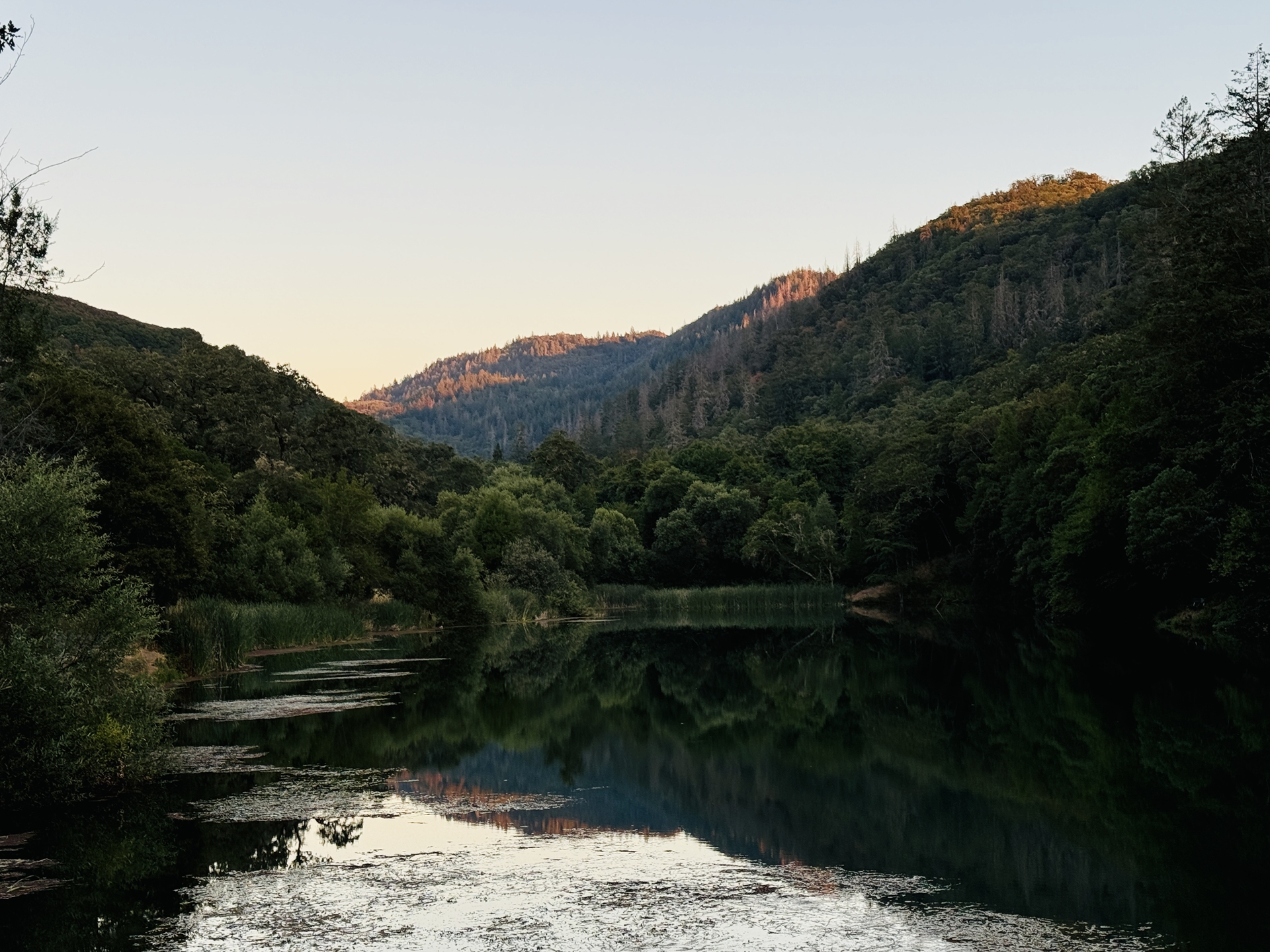
The lawsuit involves Stanford Vina Ranch Irrigation Company, Los Molinos Mutual Water Company and Peyton Pacific Properties, LLC. Together, the companies hold the majority of riparian water rights along California’s Deer Creek and Mill Creek, each stretching approximately 60 miles.
Stanford Vina holds rights to approximately 66% of Deer Creek’s flow, which it uses for agricultural purposes across 5,700 acres. Los Molinos holds rights to approximately 70% of the water diverted from Mill Creek, also for agricultural purposes. Peyton Pacific holds rights to an unspecified amount of Mill Creek’s flow.
Protecting Fish During Drought.
The dispute has its roots in California’s efforts to protect fish during periods of drought.
In 2014 and 2015, California water regulators adopted emergency regulations restricting nearly all water diversions from Mill, Deer and Antelope creeks.
Following a drought emergency proclamation in May 2021, the California State Water Resources Control Board was directed to evaluate how much water needed to remain in streams to protect fish.
In September 2021, the board adopted emergency regulations establishing minimum streamflows for Deer and Mill creeks. The board emphasized the importance of both waterways to migrating salmon and steelhead.
The following month, curtailment orders directed 22 water rights holders to reduce or stop diverting water to maintain those minimum flows.
Violations carried substantial financial penalties, including $1,000 per day and $2,500 for every acre-foot of water diverted.
The companies alleged that the restrictions prevented them from exercising their established water rights by requiring nearly all the water they ordinarily diverted for agriculture to remain in the creeks.
Similar emergency regulations and curtailment orders followed in 2022. The curtailment orders issued in each year remained in effect for eight months.
Water Users Sought a Hearing.
The companies alleged that they requested evidentiary hearings in both 2021 and 2022 but were denied.
An evidentiary hearing provides an opportunity to present evidence, question witnesses, and challenge information used to support a government decision.
According to the companies, they were not permitted to cross-examine employees of the State Water Resources Control Board or the California Department of Fish and Wildlife who supported the emergency restrictions.
Instead, the companies were given only five minutes to speak during the public comment portion of the 2021 board meeting. The extent of their participation in the 2022 meeting was not specified in their allegations.
Requests to reconsider the curtailment orders were also denied.
A Constitutional Question.
The companies filed suit in federal court in October 2021, alleging, among other things, violations of their constitutional rights under the Fifth and Fourteenth Amendments.
The Fourteenth Amendment protects against the government depriving people of property without due process of law.
The federal district court dismissed the due process claims after determining that the board’s actions were legislative rather than adjudicatory.
The distinction is important.
Legislative actions generally establish rules affecting broad groups of people. Adjudicatory actions, by comparison, target or particularly affect specific individuals or a relatively small group. When such actions deprive someone of a significant property interest, constitutional protections require a meaningful opportunity to be heard beforehand.
The appeals court identified two important factors in determining which category applied:
-
The severity of the impact on individual property rights.
-
The relative size of the group affected by the government action.
The court determined that both factors favored the water rights holders.
The restrictions substantially limited the companies’ ability to exercise their individual water rights. Additionally, only 22 water rights holders were subject to the regulations and curtailment orders.
The appeals court determined that the group was small enough to make individual hearings practical.
Writing for the panel, Circuit Judge Lawrence VanDyke explained:
“Five minutes without cross-examination is not a hearing “at a meaningful time and in a meaningful manner.”
Why Expired Water Restrictions Still Matter.
Although the 2021 and 2022 emergency regulations and curtailment orders have expired, the appeals court determined that the case could proceed.
Courts generally do not decide disputes that are no longer active. However, an exception exists when government actions can be repeated but expire too quickly for a legal challenge to be fully resolved.
The appeals court noted that California regulators had adopted similar emergency regulations and curtailment orders four times between 2014 and 2022.
Drought conditions could return, potentially subjecting the companies to similar restrictions.
The court also noted that it took 17 months for the district court to rule on the defendants’ first motion to dismiss, far longer than the eight months the curtailment orders remained in effect.
What the Court’s Decision Means.
The appeals court determined that the companies had adequately alleged violations of their procedural due process rights. It also reinstated their request for a judicial declaration concerning those rights.
However, the decision does not resolve the entire lawsuit.
At this stage of the proceedings, the appeals court was required to accept the companies’ properly pleaded factual allegations as true when determining whether their claims could proceed.
The ruling addresses the procedures used to impose the emergency restrictions, rather than whether the streamflow requirements themselves were justified.
In a separate decision filed on the same date, the appeals court affirmed the dismissal of the companies’ constitutional takings claims.
The due process portion of the lawsuit will now return to the United States District Court for the Eastern District of California for further proceedings.
, Case No. 25-2302, District Court Case No. 2:21-cv-01961-DAD-DMC. Published opinion filed November 24, 2026. Judge Lawrence VanDyke, writing for the panel. . Missvain, August 2024. Licensed under the Creative Commons Attribution 4.0 International license.