
- Mexico will reduce its Colorado River deliveries by 250,000 acre-feet per year in 2027 and 2028 under low-reservoir conditions.
- The two countries created new rules for coordinating water deliveries as Lake Mead rises or falls.
- Mexico may continue storing some of its Colorado River water in the United States through its Water Reserve.
- The agreement continues joint work on river salinity, environmental restoration and water conservation.
- Most of the new measures will remain in effect through December 31, 2028.
Friday, September 11, 2026 — The United States and Mexico have reached a new agreement governing Colorado River operations through the end of 2028, including water reductions for Mexico when Lake Mead is low and possible increased deliveries when reservoir conditions improve.
The International Boundary and Water Commission considered the agreement on September 2, 2026, in El Paso, Texas. It continues years of cooperation between the two countries under the 1944 Water Treaty and several later agreements known as “Minutes.”
The new measures address more than the amount of water crossing the border. They also cover Mexico’s ability to store water in the United States, salinity in the river, environmental restoration, the reliability of daily deliveries and future conservation projects.
A River With Less Water in Storage.
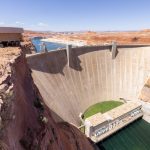
The agreement comes as Colorado River reservoirs have continued to decline.
According to the document, storage in the Colorado River system has fallen because of prolonged water scarcity during the past 27 years.
The agreement also notes that the U.S. Department of the Interior has adopted new Colorado River guidelines for 2027 and 2028. Those guidelines are intended to protect critical elevations at Lake Mead and Lake Powell and provide more reliable water releases for downstream users.
Those U.S. rules could reduce deliveries to Colorado River water users in the United States.
The two countries agreed that Mexico should also participate in reductions under low-reservoir conditions.
Mexico Will Take a 250,000 Acre-Foot Reduction.
Under the agreement, Mexico’s Colorado River delivery will be reduced by 250,000 acre-feet per year in both 2027 and 2028 under the low-reservoir provisions.
An acre-foot is the amount of water needed to cover one acre of land one foot deep.
The reduction is tied to the U.S. Lower Basin. Under the new domestic guidelines, Lower Basin water users in the United States are expected to receive a reduction of 1.25 million acre-feet annually during 2027 and 2028.
The commissioners said Mexico’s reduction was based on the countries’ earlier principles for sharing shortages caused by low river conditions.
The United States will provide Mexico with monthly information about Colorado River Basin conditions, including precipitation, streamflow and water stored in the reservoirs. The United States will also provide annual information about the natural causes affecting Lake Mead’s elevation.
If U.S. Lower Basin reductions later fall below 1.25 million acre-feet, the two countries will meet to determine whether Mexico’s reduction should also change.
Higher Lake Mead Levels Could Mean More Water.
The agreement also addresses what happens if conditions improve.
If forecasts show Lake Mead reaching an elevation of 1,125 feet or higher during 2027 or 2028, the International Boundary and Water Commission will meet to discuss procedures that could increase deliveries to Mexico.
The determination will rely on the U.S. Bureau of Reclamation’s August 24-Month Study, which forecasts future reservoir conditions.
The agreement therefore provides different procedures depending on whether Lake Mead is relatively high or low rather than establishing one operating rule regardless of reservoir conditions.
Mexico Can Continue Storing Water in the United States.
Another part of the agreement continues Mexico’s Water Reserve.
That system allows Mexico to store some of its annual Colorado River allotment in the United States rather than immediately taking delivery of the water.
Mexico may use water from its reserve for any purpose allowed under the agreement. Creation, storage, and delivery of reserve water are subject to operating rules intended to avoid adverse effects on U.S. reservoir operations and other Colorado River operations.
The agreement also includes special restrictions on deliveries from Mexico’s Water Reserve when Lake Mead is low.
Salinity Remains a Cross-Border Issue.
Water quantity is only part of the agreement. Water quality also received considerable attention.
The United States and Mexico will continue a Salinity Pilot Program from January 1, 2027, through December 31, 2028.
Salinity refers to the amount of dissolved salts in water. High salt levels can create problems for farms, communities and other water users.
The countries will monitor salinity in Colorado River water and exchange technical and operating information. Monitoring will include measurements at the Northerly International Boundary and other locations.
The agreement also continues cooperation near the Southerly International Boundary. The United States has previously used infrastructure there to reduce highly salty water arriving at the boundary, while Mexico maintains capacity in the Sanchez Mejorada Canal as part of the coordinated operations.
Making Daily Deliveries More Reliable.
Mexico has also raised concerns about changes in the amount of Colorado River water arriving from one day to another.
The two countries will continue a working group focused on daily flow reliability and will review their operating procedures.
Targets include keeping daily flow variations within 3 percent of Mexico’s daily request and limiting changes in Mexico’s daily request to no more than about 70.6 cubic feet per second.
The agreement recognizes that additional water storage within Mexico is an important part of addressing those delivery problems.
Environmental Restoration Will Continue.
The United States and Mexico also agreed to continue environmental work along the Colorado River.
During 2027 and 2028, the two governments will work with a binational coalition of nongovernmental organizations to maintain existing habitat restoration sites and conduct environmental monitoring.
The agreement provides a total of $5,579,283 to maintain those sites and support scientific research and monitoring. The United States and Mexico will each provide one-third of that amount. The nongovernmental organizations have pledged to provide the remaining one-third.
Water needed for existing habitat restoration sites will be supplied by the binational coalition. Water designated for environmental purposes may also be stored within Mexico’s Water Reserve and made available for delivery under the agreement.
More Conservation Projects Could Follow.
The agreement also keeps the door open for additional water conservation projects.
A Binational Projects Work Group will meet at least twice each year to review possible projects and conservation opportunities. Projects could include efforts in Mexico or international projects that generate or conserve Colorado River water.
The document says conserved water could potentially be used for several purposes, including offsetting reductions during low-reservoir conditions.
However, this agreement does not automatically approve future projects. Projects requiring implementation would need additional review and, when required, a later agreement between the two governments.
The Agreement Runs Through 2028.
Most of the measures will remain in effect through December 31, 2028.
The agreement also states that the United States will be considered to have fulfilled its Colorado River delivery obligations to Mexico under the 1944 Water Treaty during the agreement’s term, despite reductions or adjustments made under its provisions.
It further states that the agreement does not establish a precedent for future Colorado River agreements between the two countries.
For the next two years, the agreement provides a framework for managing a river whose conditions can change significantly from one year to the next. It sets rules for sharing reductions when Lake Mead is low, provides a process for considering additional deliveries if conditions improve, and continues cooperation on water quality, conservation, and environmental restoration.